From the Director’s Table – Dr. M. Roychowdhury
UTI may not just come from poor hygiene, but it could start in someone’s kitchen.
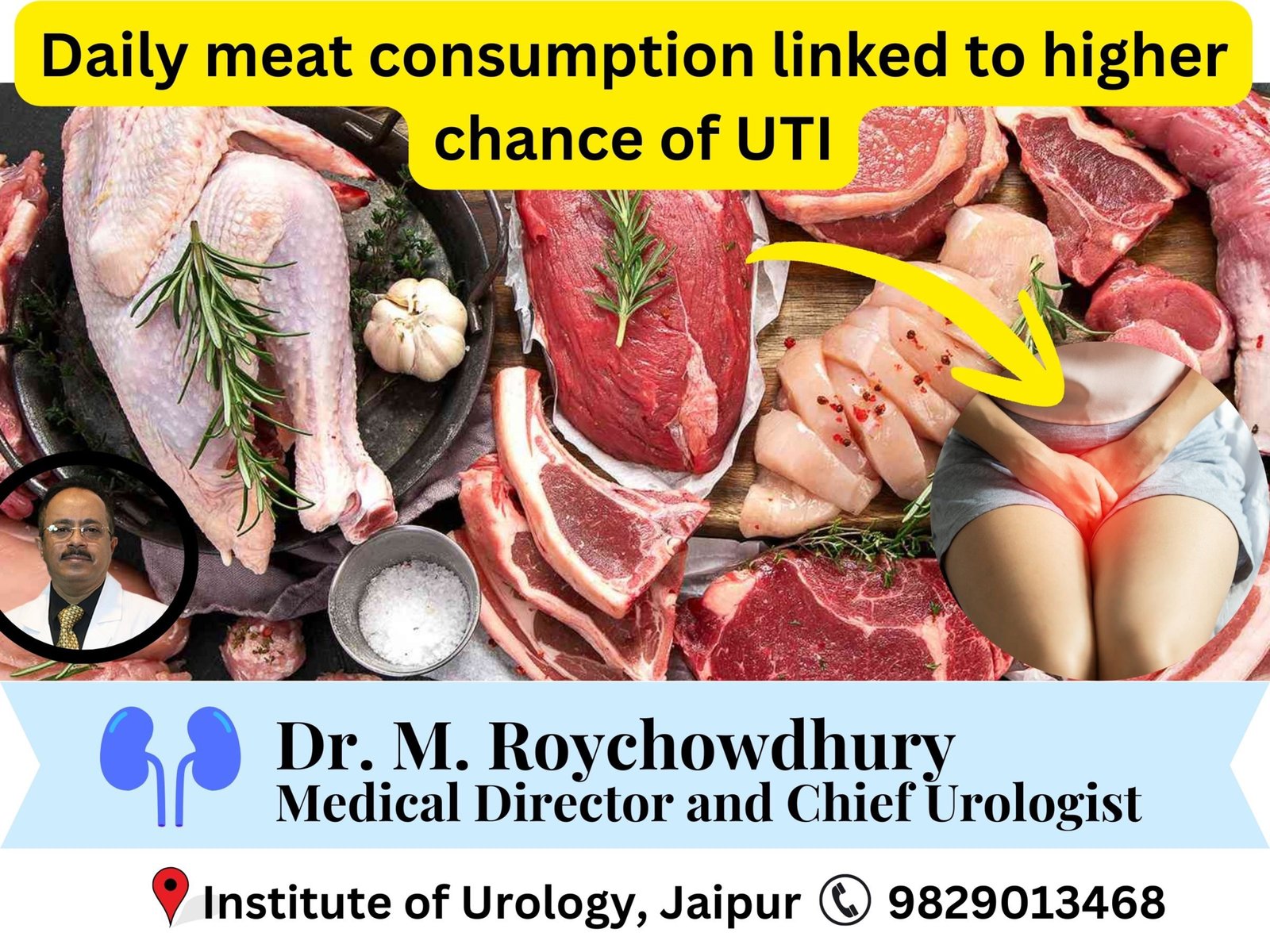
Studies have revealed that 1 in 5 UTIs may be caused by food-borne E. coli. Up to 20% of UTIs could originate from bacteria that jump from raw meat to the human host through food handling and preparation.
Nearly 20% of human infections shared identical bacterial fingerprints with those found in meat, confirming a direct link.
This finding shifts how we think about UTI.
Understanding the Food–UTI Connection
Traditionally, urinary tract infections have been associated with poor personal hygiene, urinary stasis, sexual activity, or anatomical factors. However, emerging evidence suggests that food safety and dietary habits—especially frequent meat consumption—may play a significant role in UTI risk.
Raw and undercooked meats, particularly poultry, can carry pathogenic strains of Escherichia coli. During food preparation, improper handling, inadequate cooking, or cross-contamination of kitchen surfaces may allow these bacteria to enter the human gastrointestinal tract and later colonize the urinary tract.
Why This Matters Clinically
Understanding food-borne transmission of UTI-causing bacteria has important implications:
- It broadens prevention strategies beyond personal hygiene
- It highlights the role of safe food handling practices
- It emphasizes kitchen hygiene as a public health concern
- It may help explain recurrent UTIs in otherwise healthy individuals
Practical Preventive Measures
- To reduce the risk of food-borne UTIs:
- Wash hands thoroughly after handling raw meat
- Avoid cross-contamination of cutting boards and utensils
- Ensure meat is cooked thoroughly
- Clean kitchen surfaces regularly
- Store raw meat separately from ready-to-eat foods
Conclusion
The association between daily meat consumption and urinary tract infections challenges traditional thinking about UTI causation. Recognizing the role of food-borne bacteria allows for a more comprehensive approach to prevention, combining personal hygiene, dietary awareness, and proper food safety practices.